
Bamboo decking board Thermo 1850 × 137 × 18 mm (0.253 m²)



Product detailed description
The bamboo decking board is a strong and dense flooring material made from compressed bamboo fibers and a unique patented thermal treatment process. This makes it one of the strongest, heaviest, and most durable materials on the market, creating an ideal outdoor space for relaxation and entertainment.
The special symmetrical side profile offers a choice between a grooved or smooth surface and allows for quick installation with hidden fasteners. Like other untreated hardwoods, THERMO decking boards will gradually develop a lighter color when exposed to outdoor conditions, creating a very natural appearance.
✅ Highest durability class
✅ Extremely hard and wear-resistant
✅ Resistant to mold and warping
✅ High fire resistance rating
✅ Environmentally friendly
✅ Luxurious hardwood appearance
✅ Easy installation
✅ CO₂ neutral
Deck installation guide:
Build your own terrace with bamboo decking boards. In this guide, we show you how to create a professional deck in 6 steps.
Preparation:
Good preparation is half the work. Plan your design carefully, decide how you want to install your terrace, and make a sketch to calculate the materials needed. Include the laying pattern, substructure, beams, and possible cutting losses.
How big should your terrace be?
First determine the size. For a simple deck with a dining table, 4 chairs, and loungers, a 4 × 5 m (20 m²) terrace is sufficient. Also decide the direction of installation (lengthwise or widthwise). For aesthetic reasons, boards are often installed parallel to the house, which may ignore slope. However, for optimal durability, we recommend a slope of 1–2% (about 1 cm per meter).
Where will you install the terrace?
On flat surfaces like rooftops or balconies, rubber tiles can be used as a base (ensure load capacity!). For garden or water installations, a solid substructure is required, such as hardwood posts or adjustable beam supports.
What tools and materials are needed?
Depends on the surface. Basic tools: string line, measuring tape, pencil, level, saw, cordless drill, decking boards, beams, and clips. Additional tools may include shovel, rake, drill, auger, post driver, knife, ratchet, weed control fabric, concrete tiles, adjustable supports, posts, and screws.
Material calculation
Standard size of bamboo decking boards is 140 × 1850 mm. You need approx. 4 boards per m². Also consider spacing between boards (approx. 6 mm).
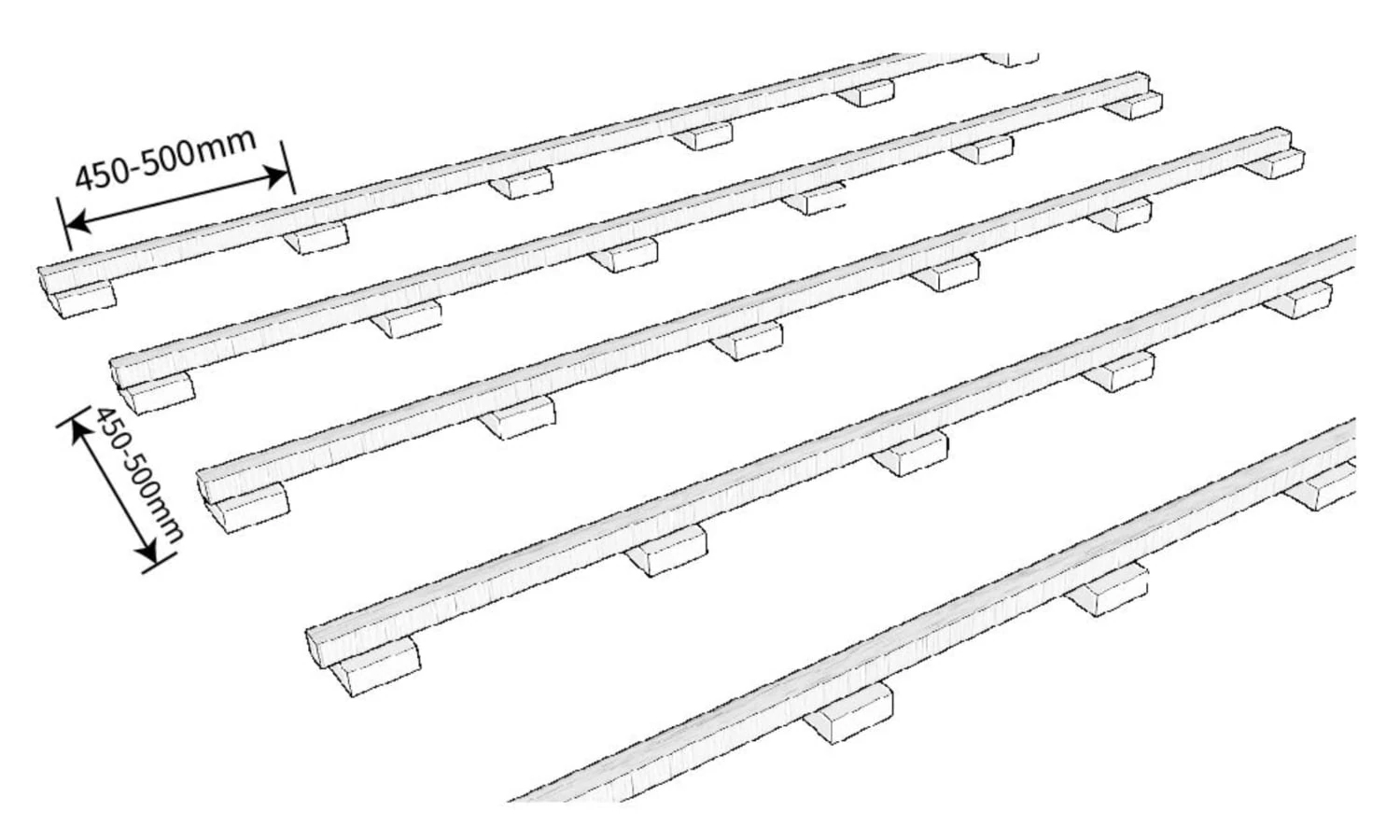
The distance between joists must be 45–50 cm (center to center). One board is therefore supported by 4 joists. Below is an example of how to calculate the exact number of joists and posts.
Let’s assume you want to build a terrace measuring 500 cm in length and 400 cm in width. To calculate the number of joists, divide the terrace length by the joist spacing: 500 cm / 50 cm = 10 + 1 end joist = 11. Multiply this by the terrace width in meters: 11 × 4 = 44 meters. So you need 44 linear meters of joists.
If you use posts as a base, calculate as follows: divide both length and width (in cm) by 50 cm. For a 500 × 400 cm terrace: 500/50 = 10 posts in length and 400/50 = 8 in width. Total = 10 × 8 = 80 posts.
Warning! The foundation is crucial. Do not cut costs here and always follow recommended spacing.
INSTALLATION OF BAMBOO DECK IN 6 STEPS:
Step 1: Alignment and ground preparation
Step 2: Installing posts:
(Skip if using tiles or adjustable supports.)
After marking, install the posts. Drill holes for 6 × 6 cm hardwood posts using a 7 cm auger and secure them in the ground.
Posts should be placed about 80 cm deep to prevent frost lifting.
Attach joists to the sides of posts (using M8 bolts), not on top.
Step 3: Weed barrier installation
A weed membrane is essential to prevent growth. Without posts, place it directly on the ground.
With posts, cut cross holes and fit the fabric over them. Ensure ~20 cm overlap. Staple if needed.
Step 4: Installing joists
Use beams min. 40 × 60 mm. Recommended: Azobé hardwood 45 × 70 mm, placed vertically.
Avoid ground contact. Use concrete pads, rubber tiles, or adjustable supports.
If using posts: fix joists to sides using M8 × 120 mm bolts. Leave 5–8 mm gaps between ends.
Important! Ensure slope of approx. 1 cm per meter for drainage.
Step 5: Install decking boards
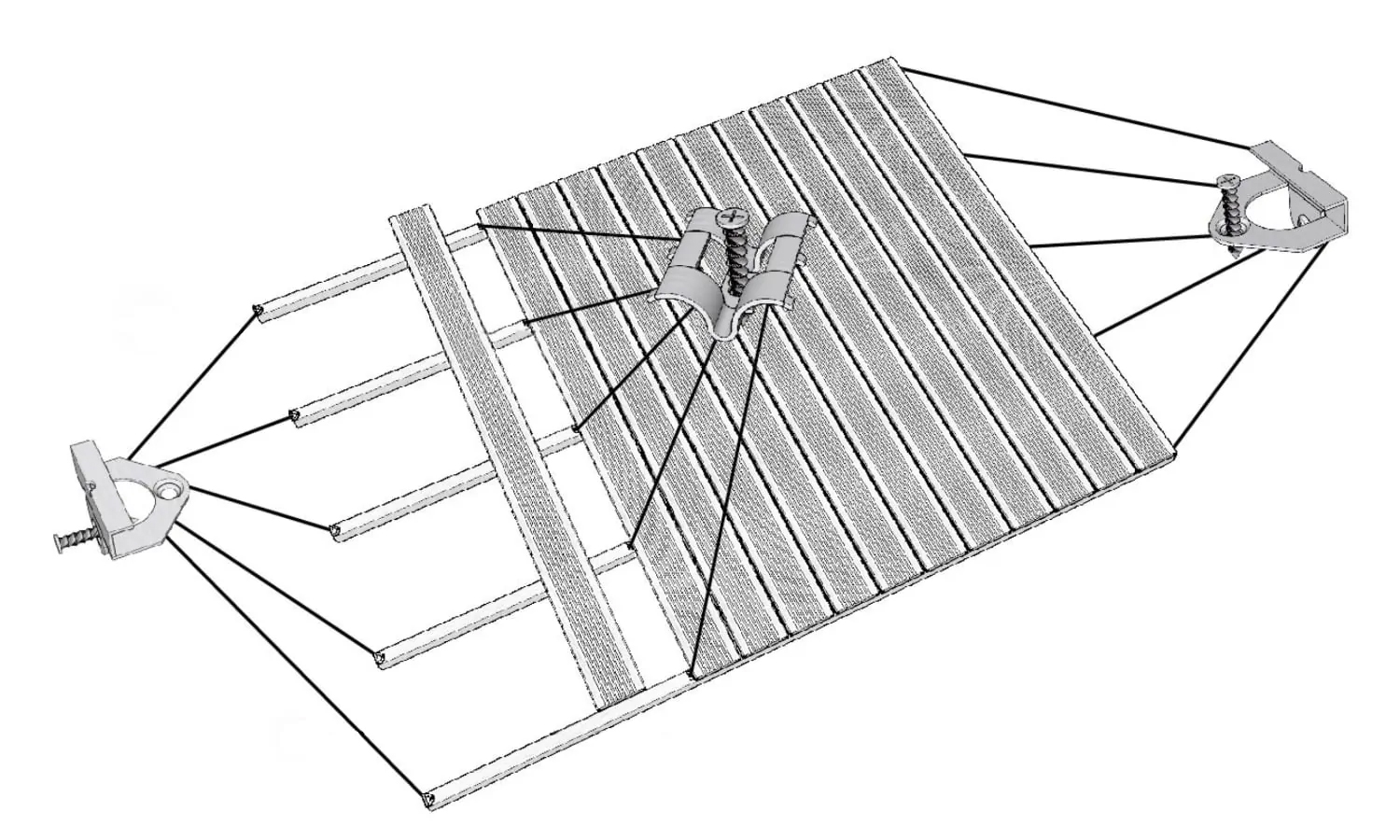
The installation of our bamboo decking boards is very simple. Instead of screwing the boards down, our bamboo decking boards are equipped with grooves that allow special decking clips to fit into the boards. This enables a hidden fixing system (clips and screws are out of sight), which creates a much cleaner look. In addition, the clips automatically ensure the correct spacing between the boards and allow the material to expand and contract with weather changes.
Thanks to the excellent stability of our decking boards and the tongue-and-groove system on the ends, no gap is required between the board ends. However, the ends must be treated with oil or wax to prevent water penetration.
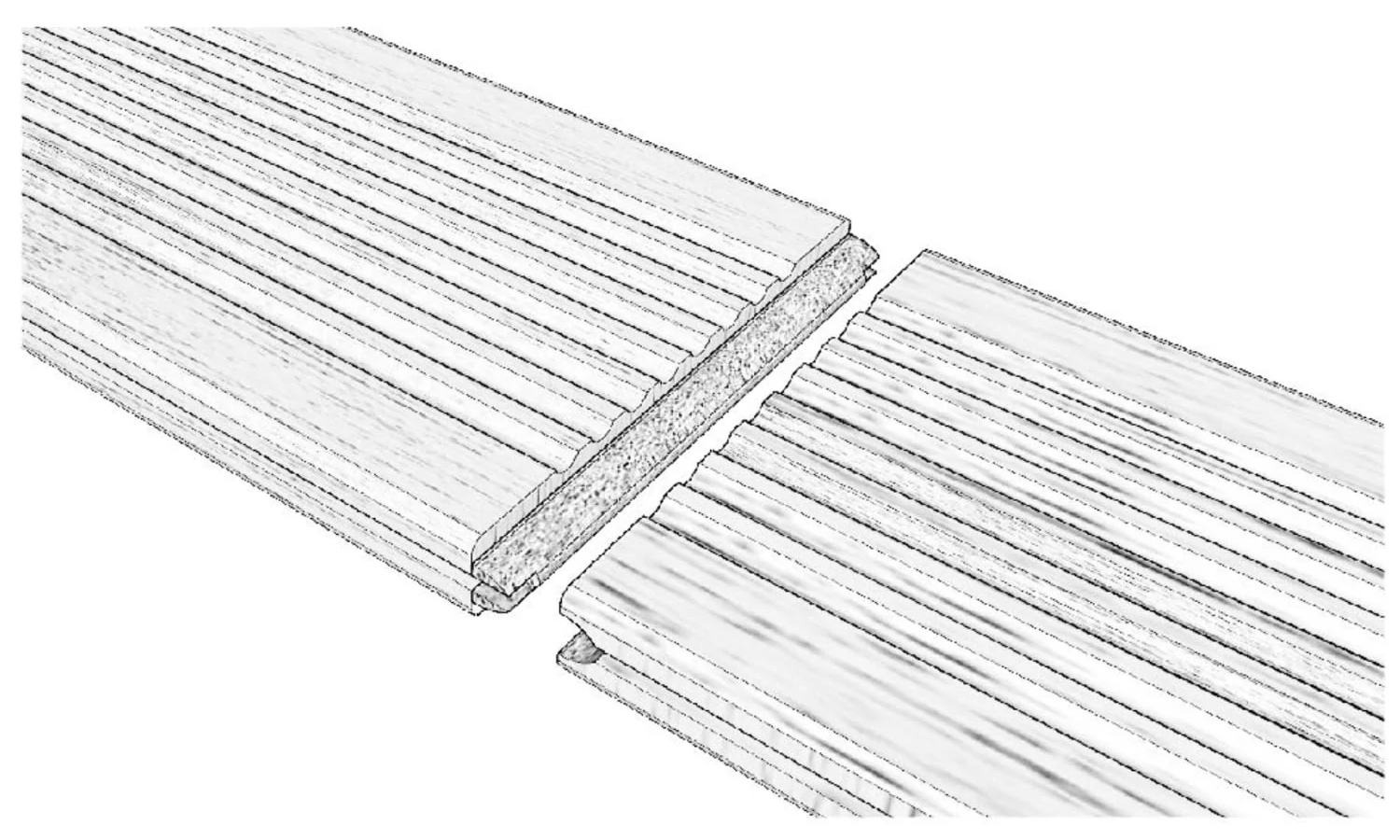
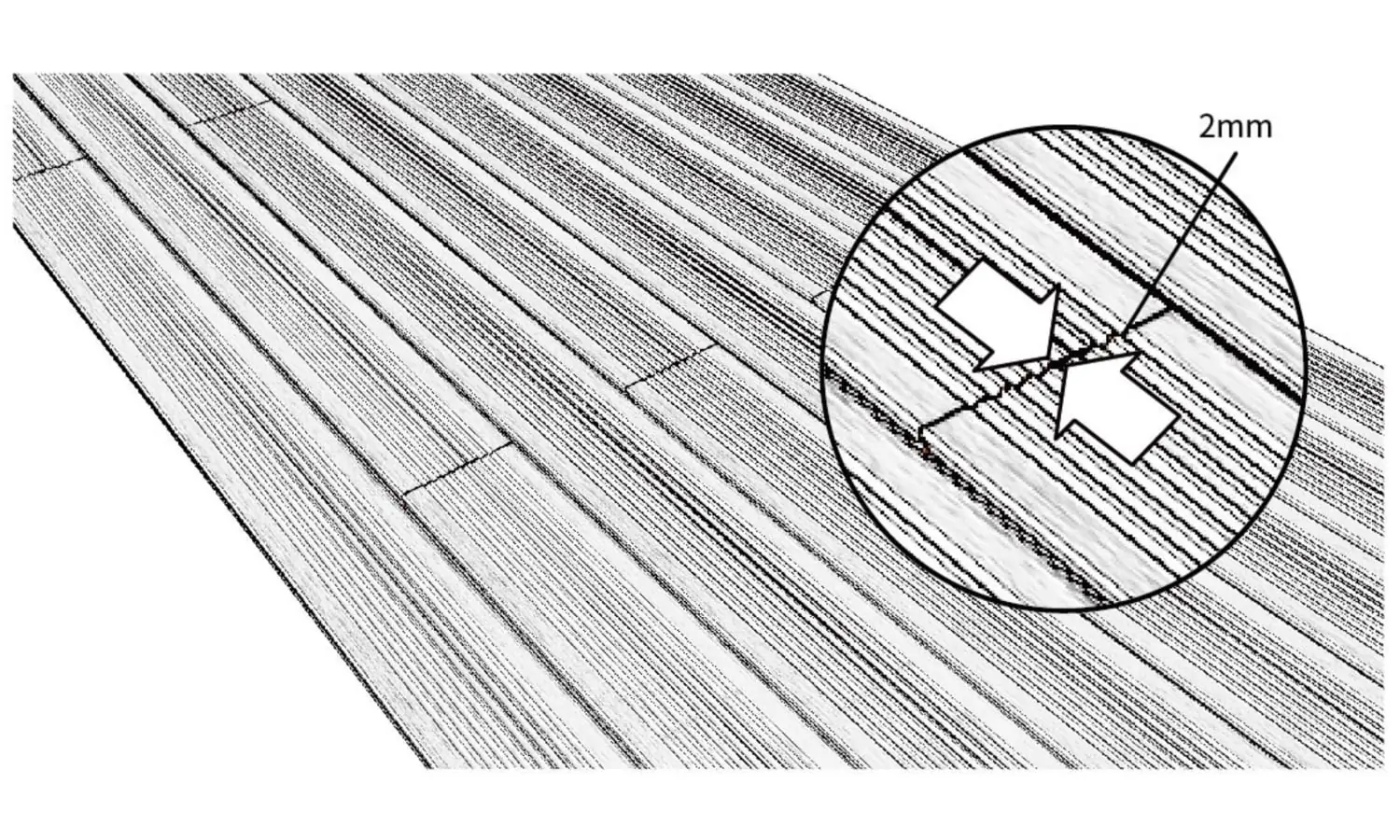
Smaller decking board pieces must always be supported by at least 3 joists. The ends of the boards should be placed on the joists wherever possible. If a staggered pattern is required, the distance between supporting joists should be a maximum of 300 mm (center to center).
Installation of bamboo decking boards with clips:
Decide which side of the board will be used as the top (grooved or smooth).
Start by placing the first board in a corner of the terrace. Leave at least 2 cm between the deck and any walls or obstacles to ensure proper ventilation.
Insert the clip into the groove of the board.
Drill a hole for the screw into the joist. Hardwood joists must always be pre-drilled (3.2 or 3.5 mm drill bit, length 8–11 cm).
Install the screw into the clip and joist without tightening fully.
Place the next decking board.
Tighten the screw. Always screw perpendicular to the joist. Use a cordless drill at low speed and low torque. Perform test runs first to adjust the torque. If needed, use green soap to ease screwing.
If tongue and groove meet on a joist, use 1 or 2 clips as shown in the diagrams.
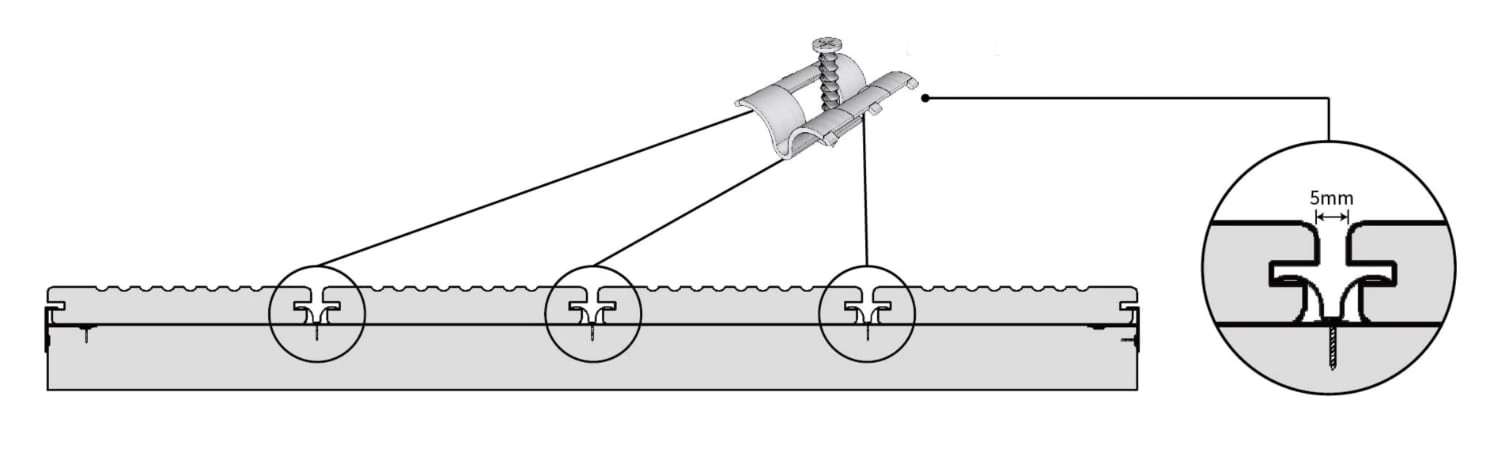
Installing bamboo decking boards with screws:
Drill holes for the left and right screws at a distance of 20 mm from the edges.
Use stainless steel screws with a size of approx. 5.5 × 50 mm.
Step 6: Finishing the terrace
Protruding boards can be safely cut off. Depending on the design, the cut pieces can be reused for further rows. Excess beam lengths can be trimmed as a final step, and the sides can be finished with vertical or side boards.
Cut ends must be treated with oil or wax to prevent water penetration.
Once the deck is fully installed and neatly finished, it is recommended to clean it to remove dust and cutting residues.
To prevent discoloration, apply oil twice a year. The first maintenance is best done 3–4 months after installation. Using Exterior Bamboo Shield helps maintain the beautiful natural color. You can also prevent color differences by regularly moving outdoor furniture or storing it during winter.
Your bamboo terrace is now ready for use. If you have any questions about our products, installation, or maintenance, feel free to contact us.
Additional parameters
| Category: | Bamboo decking boards |
|---|---|
| Weight: | 6 kg |
| Dimensions: | 185 × 140 × 18 mm |


Discussion
Be the first who will post an article to this item!